
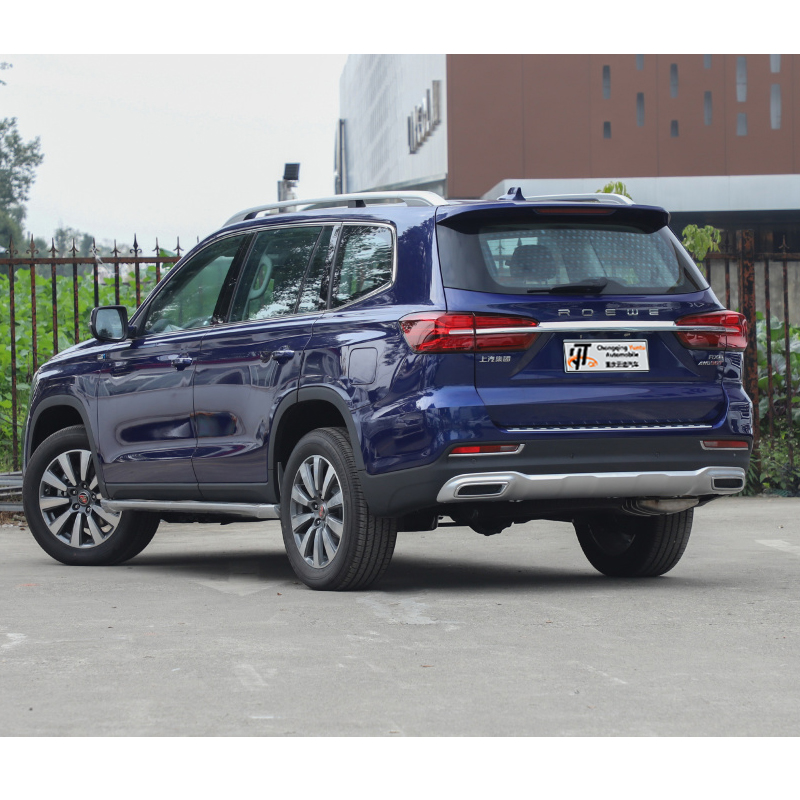
From a usage perspective, Roewe Car chassis components are actually more prone to problems than the engine, but during routine maintenance, many people often neglect to inspect the Roewe Car chassis components. The parts that are prone to failure on the chassis of Petrol Car are mainly concentrated in:
2. Suspension control arm rubber sleeve: After the rubber sleeve is damaged, the vehicle will suffer from a series of malfunctions such as deviation and swaying. Even four-wheel alignment will not help. If you carefully inspect the chassis of a Roewe Car, damage to the rubber sleeve can be easily found.
3. Steering rod: Loose steering rod is a serious safety hazard. Therefore, during routine maintenance, this part must be carefully inspected. The method is very simple: hold the pull rod and shake it hard. If there is no shaking, it means everything is normal. Otherwise, the ball head or the pull rod assembly should be replaced.
4. Exhaust pipe: The exhaust pipe is one of the most easily damaged parts under the car. Don`t forget to take a look during maintenance. Especially the exhaust pipe with a three-way catalytic converter should be carefully inspected.
5. Universal joint dust cover: Don`t underestimate the dust cover outside the universal joint. It not only prevents dust, but also prevents the loss of grease around the universal joint. Once the dust cover is damaged, the grease will quickly disappear. It will be lost, and the universal joint is easily damaged due to dry grinding.
Pay attention to replacing tires regularly. No matter how durable a set of tires is, it cannot last a lifetime. Some people work easily and use their cars less frequently. After a set of tires is used for several years, the tread pattern will appear to be intact on the surface, but in fact The performance of tires will also slowly age with age, and the quality will gradually decrease. If you do not understand this, it is a mistake to think that "the surface looks good" means there is nothing wrong with the tires.
When maintaining tires, first remove stones and other inclusions in the tread, and check whether the outer tire has bubbling, delamination, laceration, deterioration, aging and other faults; secondly, when disassembling the tire, remove rust from the rim, and check the inner tube and The lining should be free of damage or wrinkles, inflate according to the specified air pressure, and perform tire flanging or replacement. In addition, check whether there is any friction between the tires and fenders, the chassis floor, leaf springs, fenders, etc.