

Honda's stamping process is one of the four major processes in Petrol Car manufacturing. The stamping process is a process of processing steel plates into various complex stamping parts according to the appearance of the mold. Stamping dies are different. Each stamped part corresponds to a stamping die, which is a special die.
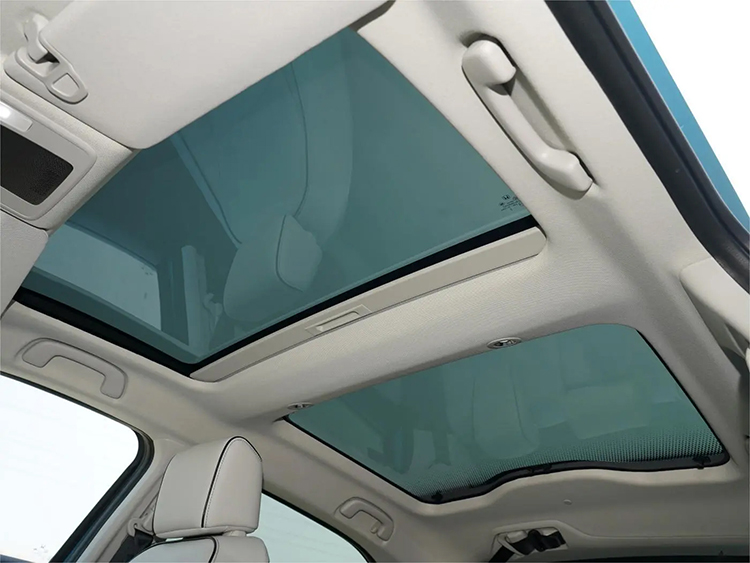
Honda Car X-ray inspection is a commonly used non-destructive testing method for Petrol Car parts. By passing X-rays through each part and adjusting different angles, an internal image of the part can be obtained, and the image can be used to determine whether there are defects, thereby ensuring the quality of the part. At present, the production of various Petrol Car parts is highly automated, and Honda Motors requires less and less manual intervention. X-ray non-destructive testing can also automatically determine the location and size of defects and mark images based on previous software settings, greatly improving detection efficiency.
Petrol Car manufacturing is a very complex system engineering, and these four processes are far more complicated than we imagine. With the development of Industry 4.0 intelligent production, the automation level and production efficiency of Petrol Car OEMs are getting higher and higher. Using smart X-ray inspection equipment to conduct non-destructive testing of Honda Car can better guarantee the number of parts. During the forming process of Honda Car, when the metal plate slides over the edge line of the punch, a visible double line shape (visible band-like curve) will appear on the product. This visual defect is called a slip line.
Honda slip lines mostly appear in the early or middle stages of their formation. The generation process of Honda slip lines is divided into four stages. In stage 1, the metal plate contacts ridge a at the high point of the punch. However, since the blank holder and the upper mold are not closed, the contact stress of the plate is very small, and the plate will not leave hardening traces at point a. At this time, at the high point of the punch, the contact stress of the plate at ridge A increases, and hardening begins. In Stage 3, as the metal plate moves down and the material flows, the hardened material at point A will flow to the bright red point. At this time, the ridge line of the high point b of the Honda Car also comes into contact with the metal plate and is hardened. When the mold is close to the bottom mold surface, there will be two high ridge lines A and B, which will slide outward respectively, that is, material hardening will occur at the top, and reach the red point at the end, that is, the slip line defect will appear in the red point.